Language
Discovery
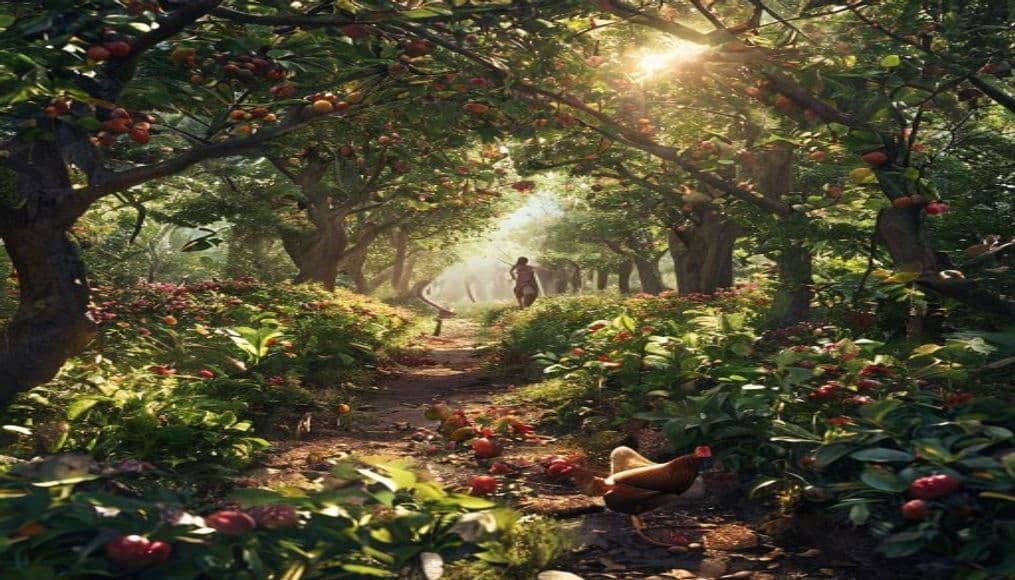
Living ExpressionLearning through immersion. Wolf pup learns to hunt by being with the pack. Play is primary discovery mode.
The Feeling
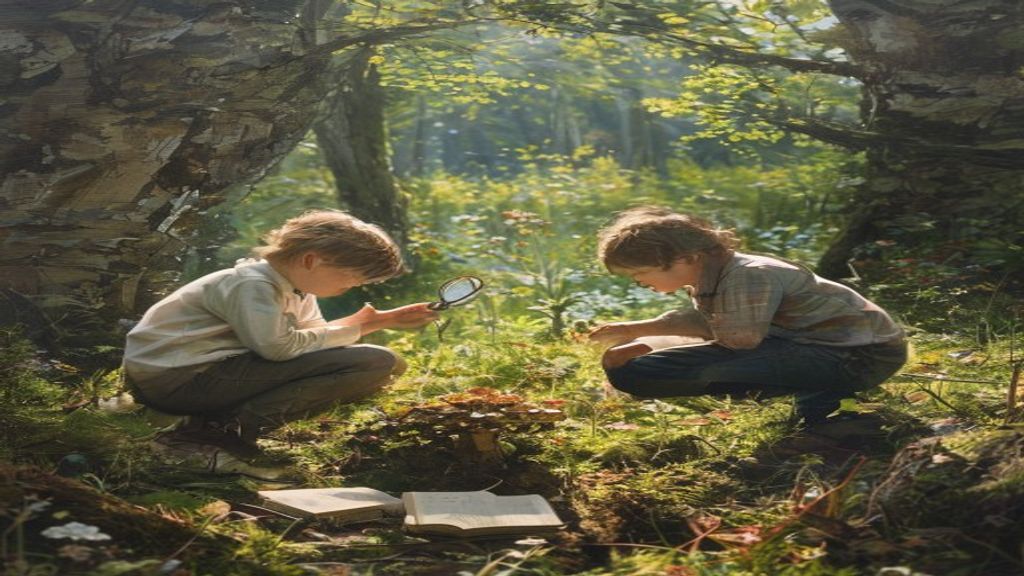
You are on your knees at the forest edge, the place where meadow grass gives way to oak canopy. The light changes here. Two ecosystems meet and the boundary between them is the richest zone, thick with species that belong to neither world and both. A child next to you has found something. She is holding a magnifying glass over a bracket fungus and her mouth is open. "It has tiny doors," she says, and she is right. The pore surface of the polypore looks exactly like a city seen from above. You have walked past this stump a hundred times and never bent down.
Beginner's mind is not a technique. It is what happens when you stop believing you already know. The Greek word apocalypse means unveiling, apokalypsis, the removal of what covers. Every genuine discovery is a small apocalypse. The thing was always there. You just could not see it yet. The child saw it because she had no reason not to look.
How It Lives Here
There is no curriculum. There are no classrooms. There is a library that holds tools and seeds and books and instruments, and its door is never locked. Children participate in adult work not because someone designed a pedagogical practice but because the kitchen needs hands and the garden needs weeding and the goats need milking and a seven-year-old who wants to help is genuinely helpful. The learning happens in the doing, the way a wolf pup learns to hunt by being with the pack.
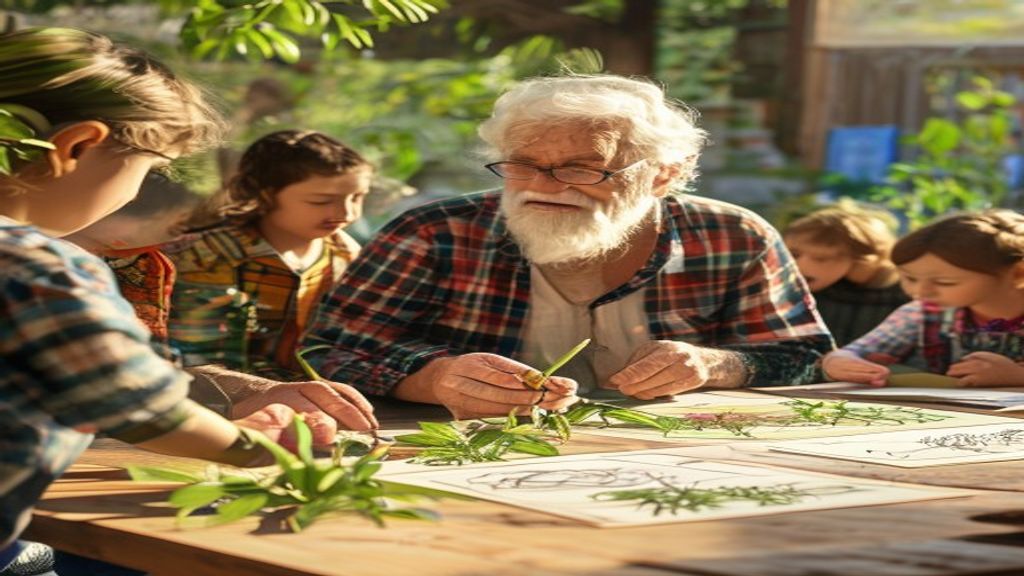
Monthly skill shares let anyone teach anything. The blacksmith shows forge welding. A teenager demonstrates the constellations. An elder teaches how to read the weather from cloud shapes and wind direction. None of this is graded or assessed. The question is never "what did you learn?" The question is "what are you curious about now?"
Discovery here follows the thread of aliveness. When you feel pulled toward something, that pull is the curriculum. A nine-year-old spent three months studying spiders. Nobody assigned it. Nobody tested her. By the end she could identify every species on the land and had begun drawing their webs with an accuracy that startled the adults.
What Nature Teaches
The mycelial network beneath the forest floor carries information about soil chemistry, water availability, and pest attacks between trees that cannot see or hear each other. The network discovers collectively. No single node holds the map. A flock of birds navigating a thousand-mile migration carries knowledge that no individual bird possesses. The knowledge lives in the relationships, in the flock itself.
Discovery in nature is never individual. It is always relational, always embedded, always happening at the edge where two things meet. The ecotone, that edge between forest and meadow, hosts more species than either ecosystem alone. Discovery lives at edges. Between disciplines. Between generations. Between what you know and what you do not. The most interesting things grow in the margins.
Where You Can See It
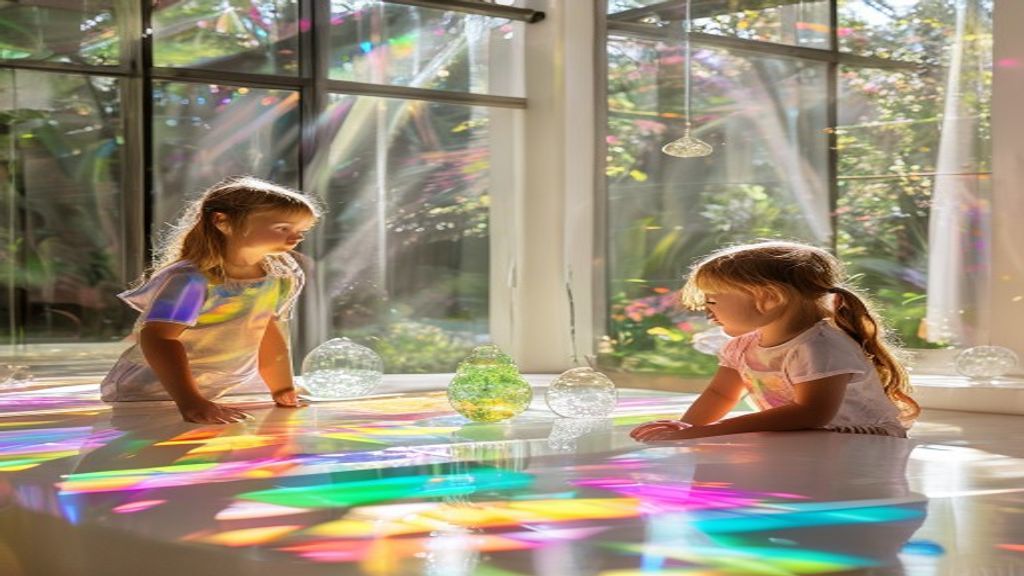
In the Reggio Emilia preschools of northern Italy, the environment is the third teacher. Children spend hours with light tables, water, clay, discovering properties of the world through direct encounter. No worksheets. No learning objectives. The documentation of the children's process covers the walls, and the documentation itself becomes a discovery about discovery.
At Schumacher College in Devon, students live and cook and garden together, and the ecology lectures happen in the same soil the theory describes. At Swaraj University in Rajasthan, there is no curriculum at all. Students design their own learning journeys through apprenticeship and community engagement. The common thread: learning is not extracted from life. Learning is life attended to.
What We're Building
A place where discovery is the ambient condition. Where the built environment provokes curiosity, tools are accessible, and the elders carry knowledge that is available through proximity rather than instruction. We are building a living library that is part workshop, part seed bank, part observatory, part kitchen.
The collection grows as the community discovers. A shelf of hand-labeled jars of local soil types sits next to a telescope sits next to a loom. The organizing principle is not Dewey Decimal. It is the actual curiosities of the people who live here. Notebooks fill with drawings and observations. Maps of the land accumulate detail year by year. The library is not a building. It is the community's collective memory of what it has noticed.
Learning Spaces
Discovery needs spaces that provoke curiosity the way a good question provokes thought -- not by directing, but by opening.
The living library. Part workshop, part seed bank, part observatory, part kitchen. A telescope sits next to a loom sits next to hand-labeled jars of local soil. The organizing principle is not Dewey Decimal but the actual curiosities of the people who live here. Books, tools, seeds, and instruments share shelves because knowledge does not sort itself into departments. The door is never locked. Discovery does not arrive on schedule.
The edge zones. The richest learning happens at boundaries -- where garden meets forest, where workshop meets kitchen, where the child's world meets the elder's. Physical spaces are designed to create these edges: a workbench at the boundary of the carpentry shop and the children's area, so a seven-year-old can watch a mortise joint being cut and ask to try. A herb garden that borders the kitchen, so the connection between plant and plate is three steps, not an abstraction.
Observation stations. Simple setups at key points around the land: a rain gauge, a wind vane, a bird count board, a soil temperature probe. Not for science as a subject but for science as a practice of paying attention. Anyone can record what they notice. Over years, the community builds a body of knowledge about its own place that no textbook could provide.
Curiosity Practices
Following the thread. When a child -- or an adult -- falls in love with a question, the community protects that falling. No one interrupts with "but you should also learn..." The nine-year-old who spent three months studying spiders was not behind in anything. She was ahead in the thing that matters most: the practice of following aliveness wherever it leads.
Monthly skill shares. Anyone teaches anything. The blacksmith shows forge welding. A teenager demonstrates the constellations. An elder reads the weather from cloud shapes. The practice teaches two things at once: how to learn from anyone, and how to teach from love rather than authority.
Asking, not answering. In the discovery culture, the question "what are you curious about now?" replaces "what did you learn?" The first opens a door. The second closes one. When adults ask children real questions -- "Why do you think the bees prefer that flower?" -- and genuinely want to hear the answer, the whole field learns to stay curious.
Between the Generations
The deepest discovery happens between ages. An elder who has read the sky for sixty years sits with a child who has never seen a thunderstorm build. A teenager who understands circuits teaches the grandmother who wants to build a weather station. The knowledge flows in all directions, because no generation has a monopoly on noticing.
The apprenticeship model lives here naturally: you learn woodworking by spending mornings with the woodworker, herbalism by walking with the herbalist, beekeeping by standing next to the beekeeper in the quiet hum of the hive. Not instruction but proximity. Not curriculum but companionship. The elder gives knowledge. The child gives wonder. Both receive something they cannot get alone.
Resources
- Permaculture Research Institute -- discovery through observation (type: guide)
- Apocalypse as Unveiling — from Greek apokalypsis: revelation and liberation, not destruction (type: guide)
The Questions That Live Here
- How do you maintain beginner's mind in a community that has been together for years?
- What structures support discovery without calcifying into academia?
- What do the elders know that only the children can see?
- Is there a discovery practice that keeps a community perpetually at its own edge?
Influences and connections
Listening for voices…
Connected Frequencies
The people, places, works, and concepts the graph shows connected to this one.