Language
Elders
Living ExpressionThe field's root system. Elephant matriarch remembers water from fifty years ago. Slowness is a different frequency, not diminished.
The Feeling
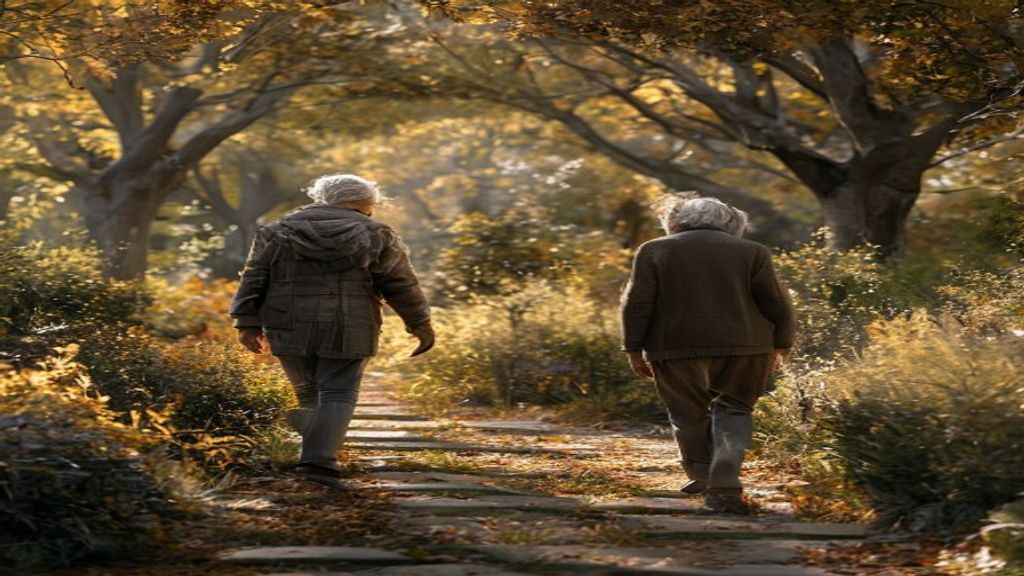
She is walking slowly and you are learning to match her pace. At first it feels like waiting. Then it starts to feel like arriving. The path through the garden that usually takes you three minutes is taking fifteen and you are seeing plants you have walked past a hundred times without noticing. She stops at a shrub and touches a leaf. "This one came from a cutting my mother rooted in 1974," she says. "It fruited for the first time the year my granddaughter was born." She keeps walking. The sentence sits in you like a seed.
You realize you have been moving at a speed that makes the world blurry. Her pace is not slow. Your pace was too fast to see anything.
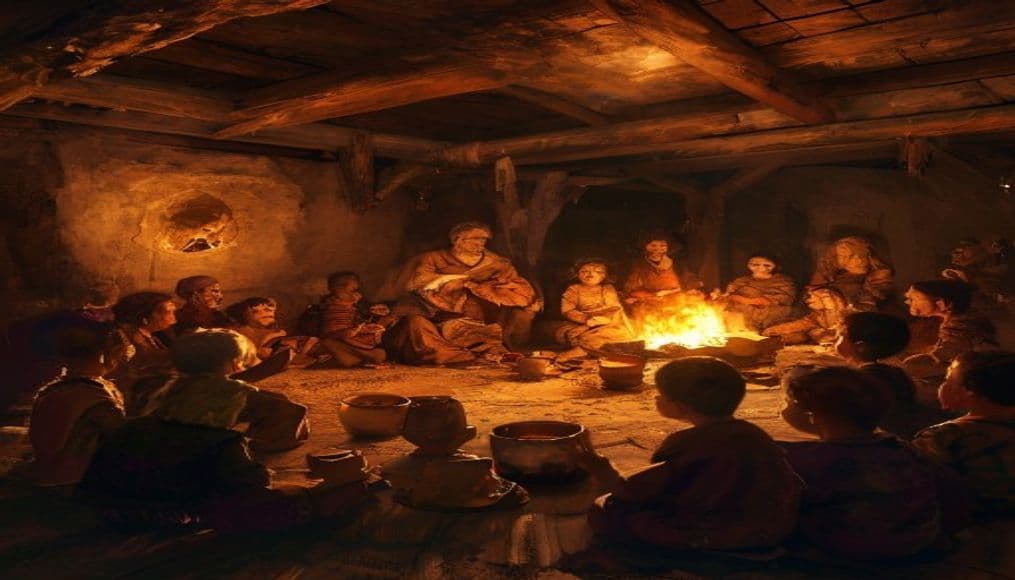
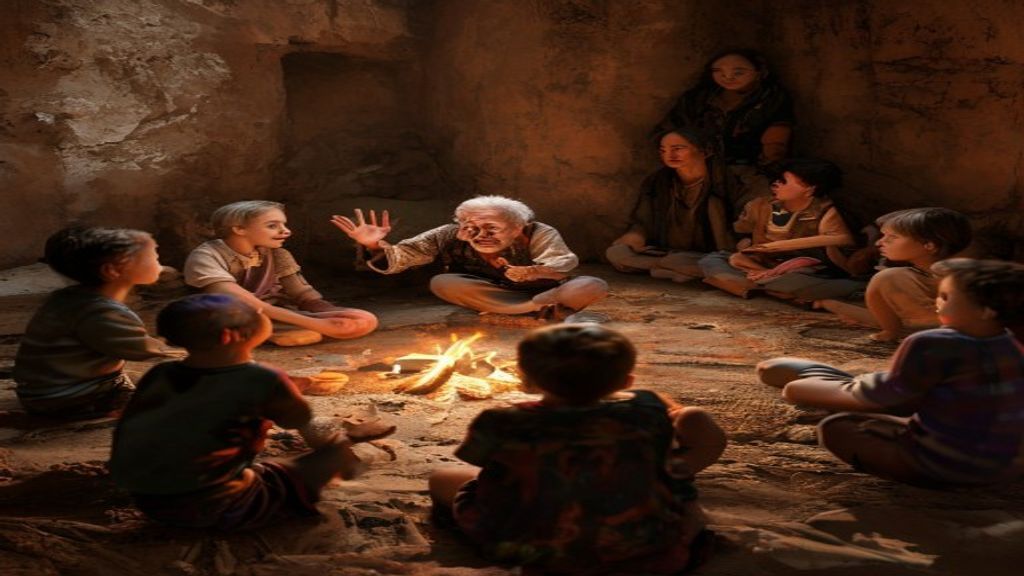
Later, at the fire circle, a question comes up that has the community split and tense. She listens for a long time. When she speaks, her voice is quiet and what she says is not a solution. It is a story about something that happened here twenty years ago, and as people listen, the tension drains out of the room. Not because the story resolved the question. Because it reminded everyone that this community has been through harder things and is still here.
How It Lives Here
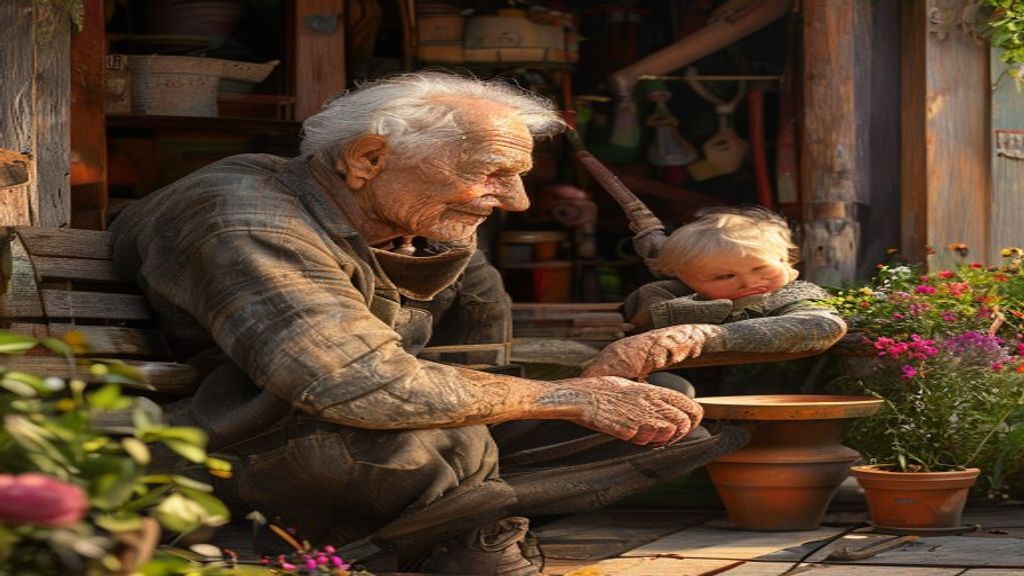
Elder housing is in the center of the community, not the edge. The path to the common kitchen passes their doors. Children on their way to the playground wave through windows. The daily proximity is the transmission — not workshops, not scheduled wisdom sessions, but a grandmother who is always around when a child falls down, an old man who sits on the bench outside the workshop and talks to anyone who sits beside him.
Once a week, an elder walk. Not therapy, not mentorship — just walking. An elder and whoever shows up, moving slowly through the land, talking or not talking. The conversations that happen on these walks have a quality that conversations in meeting rooms never reach. Something about the pace, the side-by-side rather than face-to-face, the rhythm of footfall on earth.
At community meetings, elders speak last. Not because of a rule — because they have learned that the first thing you think of saying is rarely the thing that needs to be said. Their patience is not passivity. It is a different frequency of engagement, one that holds the whole arc of the conversation before adding to it. The young members were impatient with this at first. Now they understand that the elder who waits twenty minutes to speak is the one whose words land deepest.
The children know where to find them. The old woodworker whose shop door is always open — you can sit on the bench and watch him plane a board and he will talk to you or not, depending on what you need. The grandmother whose kitchen smells like bread at four in the afternoon — she does not babysit, she is simply there, and children orbit her gravity without being asked. The transmission happens through proximity, not curriculum.
What Nature Teaches
An elephant matriarch carries the memory of water sources from fifty years ago. When drought comes and the younger elephants panic, she leads the herd to a place she visited once as a calf — a spring in a valley three days' walk away. Without her, the herd dies. The matriarch's value is not in her strength, which is fading, but in her depth, which is still growing. Herds that lose their matriarchs to poaching show measurable increases in stress, aggression, and poor decision-making for years afterward.
An old-growth tree provides more ecosystem gifts than ten young trees combined. Its root system feeds the mycorrhizal network that nourishes the entire forest. Its canopy shelters species that cannot survive in open sun. Its fallen branches become habitat. Even its death is generative — a nurse log feeds the next three hundred years of growth. To see an old tree as past its prime is to misunderstand what a forest is.
The grandmother hypothesis in evolutionary biology proposes that human longevity exists because grandmothers dramatically increase grandchild survival. We do not live long past reproductive age by accident. We live long because the species needs its elders. Slowness is not diminished capacity. It is a different frequency — the one that holds roots, memory, pattern, and ground.
Where You Can See It
In Okinawa, moai groups — lifelong circles of friends who meet regularly from childhood into old age — keep elders at the social center. Okinawans live longer than almost anyone on Earth, and the research points not to diet alone but to the fact that old age is not a departure from community life. It is the deepest participation in it.
Among the Maasai, the age-grade system places elders in direct decision-making authority. Not ceremonial authority — real authority. The council of elders deliberates on land use, conflict resolution, and resource allocation. Their decisions carry weight because they have survived the consequences of bad decisions longer than anyone else has been alive.
In grandmother councils across Indigenous North America, women who have lived long enough to hold seven generations of memory — three behind, their own, three ahead — advise the community on choices that affect the unborn. The time horizon of their thinking is not the next quarter. It is the next century.
In the Blue Zones — Sardinia, Okinawa, Nicoya, Ikaria — elders do not retire into irrelevance. They cook, they garden, they walk, they hold grandchildren, they sit in cafes and argue and laugh. The research is clear: what keeps people alive past ninety is not medicine. It is being needed. The communities with the oldest people are the ones that never stopped needing them.
What We're Building
Elder housing at the heart of the community — on the main path, near the kitchen, visible and visited. Elder walks as weekly rhythm, open to anyone. A culture where slowness is honored as a frequency, not tolerated as a limitation. Elders at the center of decision-making — not overriding, but grounding. The last to speak, the most carefully listened to.
Skills and stories transmitted through daily presence, not practice. An apprenticeship culture where the young learn by working alongside the old — not in scheduled workshops but in the ordinary rhythm of days. The deep project: a community where growing old means growing toward the center, not away from it. Where the question is not "how do we care for our elders?" but "how do we stay close enough to receive what they carry?"
Resources
- Hesperian Health Guides — community health including elder care in resource-limited settings (type: book)
- Foundation for Intentional Community — ripening-in-community models and elder housing designs (type: community)
- Senior Cohousing — elder-centered cohousing design patterns (type: guide)
- Blue Zones — research on regions where people live longest, centering elder integration (type: guide)
The Questions That Live Here
- How do you design a community where growing old means moving toward the center, not the edge?
- What decision-making role should elders hold, and how does it balance with the energy of younger members?
- How do you attract elders to a new community that has no track record — no roots yet for the root system?
- What happens to a community that loses its elders before the next generation has absorbed what they carry?
- How do you create the conditions for elderhood in a culture that worships youth?
- What does an elder need from the community in return for what they give?
Influences and connections
Listening for voices…
Connected Frequencies
The people, places, works, and concepts the graph shows connected to this one.