Language
Harmonic Rebalancing
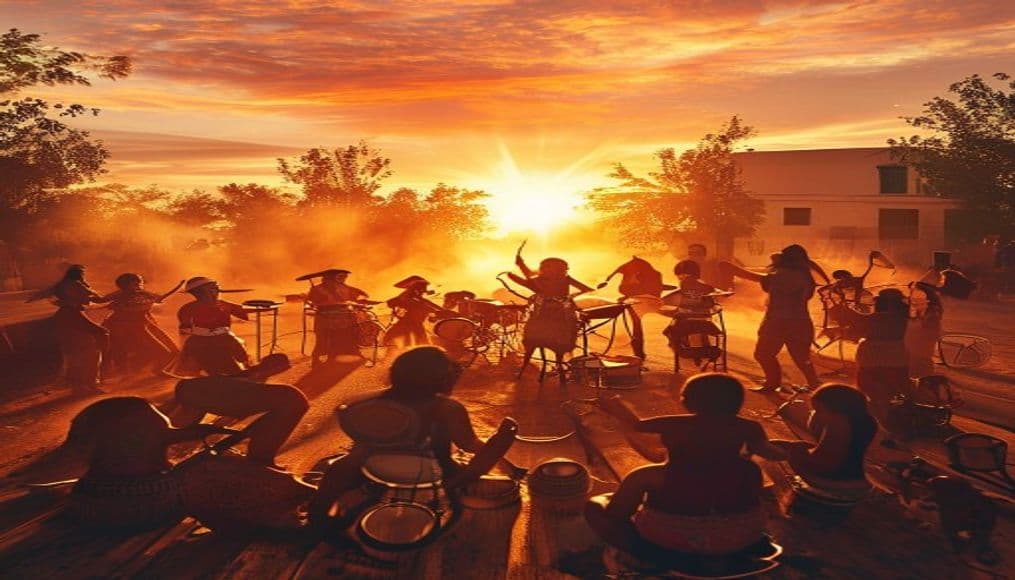
Living ExpressionFrequencies adjusting. Energy seeking new arrangement. Like jazz finding new groove after dissonance: tension WAS the doorway.
How the field tunes itself when dissonance arises. Not conflict resolution — rebalancing. A guitar string returns to its frequency after being plucked. The talking circle as tuning.
The Feeling
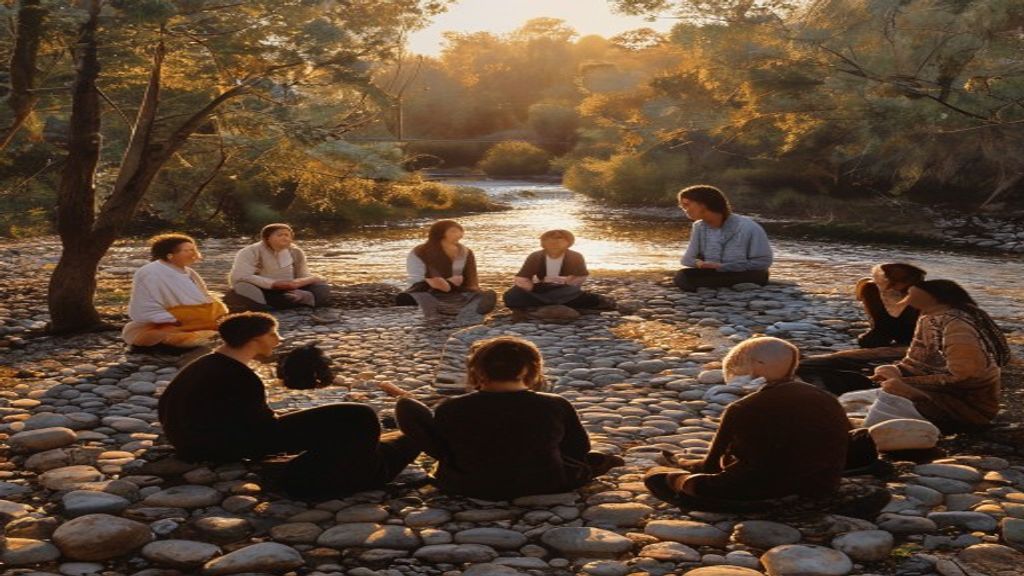
I am sitting in a circle of fourteen people and the air is thick. Two members of the community had an eruption yesterday — voices raised in the workshop, a door slammed, someone's name said like a curse. Now we are here. Not to fix it. Not to judge. To feel what the field is trying to become.
The person who slammed the door speaks first. Their voice shakes. They say things that are hard to hear — not because they are cruel but because they are true. A silence follows that lasts long enough for me to hear my own pulse. Then the other person speaks. Also shaking. Also true. And then something shifts. A third person says, quietly, "I have been feeling this tension for weeks and I was afraid to name it." A fourth nods. A fifth. The dissonance was never between two people. It was in the field, and two people had the courage — or the inability — to sound it out loud.
By the end of the circle, nothing has been resolved in the way I used to understand resolution. No one apologized. No one agreed to change. But the field reorganized. I can feel it in my body — something that was clenched has softened. The thunderstorm happened. The air is cleaner.
How It Lives Here
When tension surfaces — and it always surfaces — the community holds a rebalancing circle within forty-eight hours. Not a mediation between the people involved. The whole field participates, because the whole field is involved. Each person speaks what is alive in them. Not about the situation. About what they feel. The group listens not for who is right but for what frequency is trying to emerge.
There is a stone in the center. Whoever holds it speaks. The rest listen with their whole bodies. Some circles last an hour. Some last four. The facilitator does not guide toward agreement — they watch for the moment when the field shifts, when the clenched quality in the room softens, when someone laughs for the first time, when a truth that has been circling finally lands. The follow-up happens one week later. Not to check alignment. To feel whether the new harmonic held.
This is not conflict avoidance dressed in spiritual language. It is the opposite. Moving toward tension rather than away from it, trusting that the dissonance contains the information the field needs to evolve. A jazz ensemble knows this: the wrong note becomes the right note when the band follows it somewhere new.
What Nature Teaches
A guitar string, plucked hard, vibrates wildly. It looks chaotic. But within milliseconds the overtones organize themselves, the fundamental reasserts, and the string finds its frequency — not the same stillness as before, but a new, ringing stability. The surge was not a mistake. It was the mechanism of sound finding form.
Thunderstorms work this way. Electrical tension builds between cloud and ground until the difference becomes unbearable. Lightning bridges the gap. The thunder is the air collapsing back together after being torn apart. And afterward: the air is ionized, the dust is washed away, everything smells alive. The atmosphere needed the storm to rebalance itself.
Even the immune system does not resolve conflict. It rebalances. When a new organism enters, the body does not moralize the contact. It adjusts its chemistry — inflammation, fever, antibody production — until a new equilibrium emerges. The body after illness is not the same body as before. It is a body that has integrated new information. It has learned how to carry more life in the places that had to reorganize.
Where You Can See It
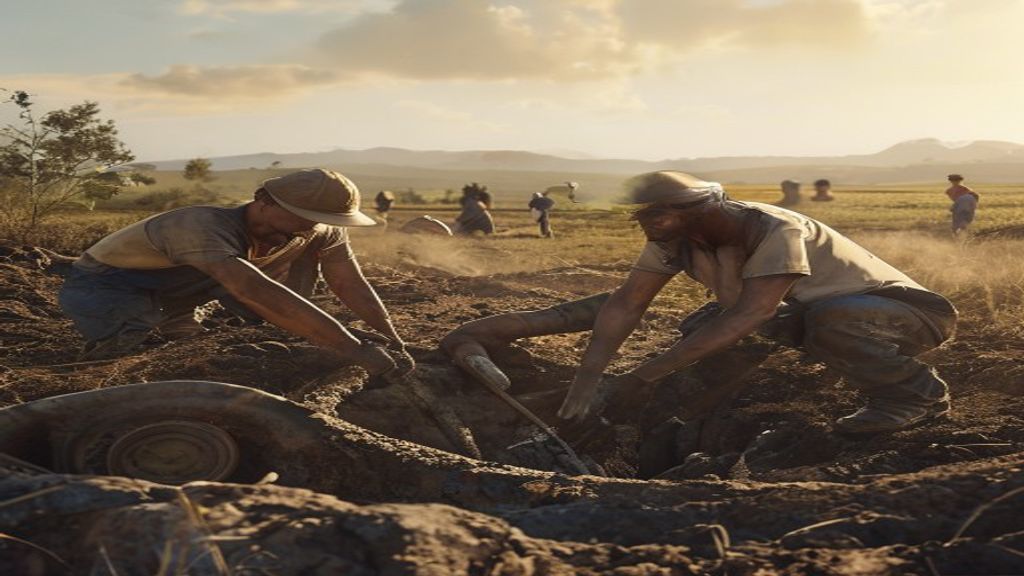
In South Africa, the Truth and Reconciliation Commission attempted harmonic rebalancing at a national scale — telling truth as the path from dissonance to new harmony, without punishment. In Hawaii, the practice of Ho'oponopono gathers the whole family when any relationship fractures, because the Hawaiians understood that disruption between two people is disruption in the field. In Sri Lanka, the Sarvodaya Shramadana movement uses shared labor — building a road together, digging a well — to dissolve inter-community tensions. The rebalancing happens through the body, not through words.
What We're Building
A culture that moves toward tension rather than managing it away. A forty-eight-hour practice: when dissonance surfaces, the circle gathers — not to arbitrate but to listen until the field reorganizes itself. A follow-up rhythm that trusts the new harmonic to hold and checks gently whether it did. A community that understands its most creative moments often begin with its most uncomfortable ones.
The Treatment Path
Rebalancing begins before eruption when the field is listening well enough.
First come subtle signals. Sideways speech. Repeated lateness. A room that keeps going flat. A dashboard that drifts. A person's body saying no long before their mouth does. These are directional sensations. The treatment here is light and early: naming, slowing, reducing pressure, pairing people back into contact, moving a task, opening a smaller circle while the path of change is still graceful.
Then comes a stronger signal if the first one was not followed. Raised voices, dropped work, a failed handoff, someone leaving the room, someone leaving themselves. At this stage the field stops treating the signal as background and treats it as focused guidance. Holding first, explanation later. The relevant people are held. The wider field is informed enough to stay honest. The circle gathers quickly because stronger signals are asking for clearer attention.
Finally comes integration. Not "everything is okay again." Something was learned. The field remembers what the early signs felt like, what dosage restored coherence, what intervention reopened beauty and flow. This memory is how rebalancing becomes living intelligence rather than repeated drama. A healthy organism becomes more skillful, more spacious, and more available for vitality the next time intensity arrives.
Resources
- Sociocracy For All — consent-based conflict resolution (type: guide)
- The Work That Reconnects — truth mandala and group rebalancing (type: guide)
The Questions That Live Here
- How do you distinguish healthy tension — the kind that grows something — from dysfunction that is slowly destroying the field?
- What prevents rebalancing practice from becoming a sophisticated form of conflict avoidance, where naming the circle replaces actually changing?
- When should the community call in outside facilitation, and how do you do that without undermining the field's trust in itself?
- What do you do when someone refuses to enter the circle?
Influences and connections
Listening for voices…
Connected Frequencies
The people, places, works, and concepts the graph shows connected to this one.